The Ten Austrian Lakes by Bike: Through the Heart of the Salzkammergut
- Activity level :
- Accommodation : Superior, Comfort
- Period : April to October
- Length of stay : 8 days
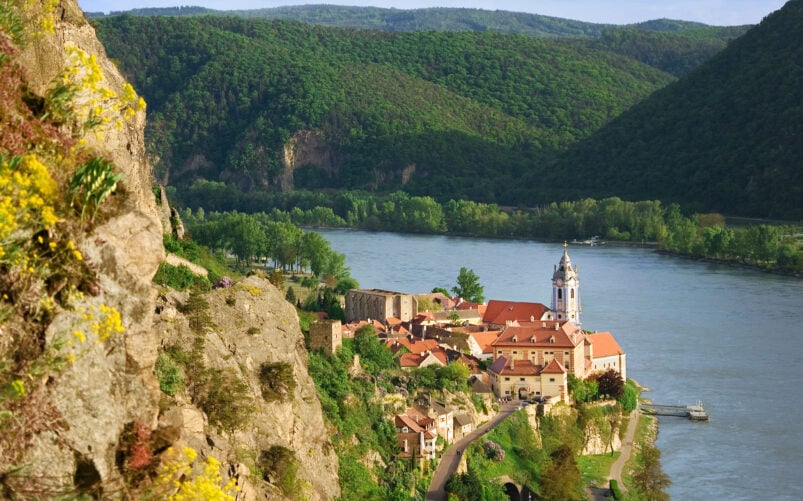
Austria is wonderfully discovered by bike, because everything feels fluid here: well-maintained bike paths, varied landscapes and stages that follow one another without stress. Our trips take you into the heart of two major cycle touring areas.
On one side, the Danube, the true backbone of Central Europe. Starting from Passau, you often ride close to the riverbanks on a mostly flat, safe and easy-to-follow itinerary, alternating paved bike paths and quiet secondary roads. The landscapes change from day to day: the Schlögen Loop and its wooded hills, the narrower stretches of the Strudengau and Nibelungengau, then the Wachau Valley, a UNESCO-listed site, with its terraced vineyards, Baroque villages and memorable stops such as Dürnstein or Melk Abbey. Depending on the trip type, you extend the experience to Vienna (also available in a sport version), then Bratislava and Budapest, following the same guiding thread: accessible, cultural cycle touring, always paced by the river. In the bike & boat version, you cycle during the day to Budapest, Vienna or Bratislava and return to the comfort of your cabin in the evening while the ship moves on. For more information, our webinar on the Danube in a bike & boat format is available online.
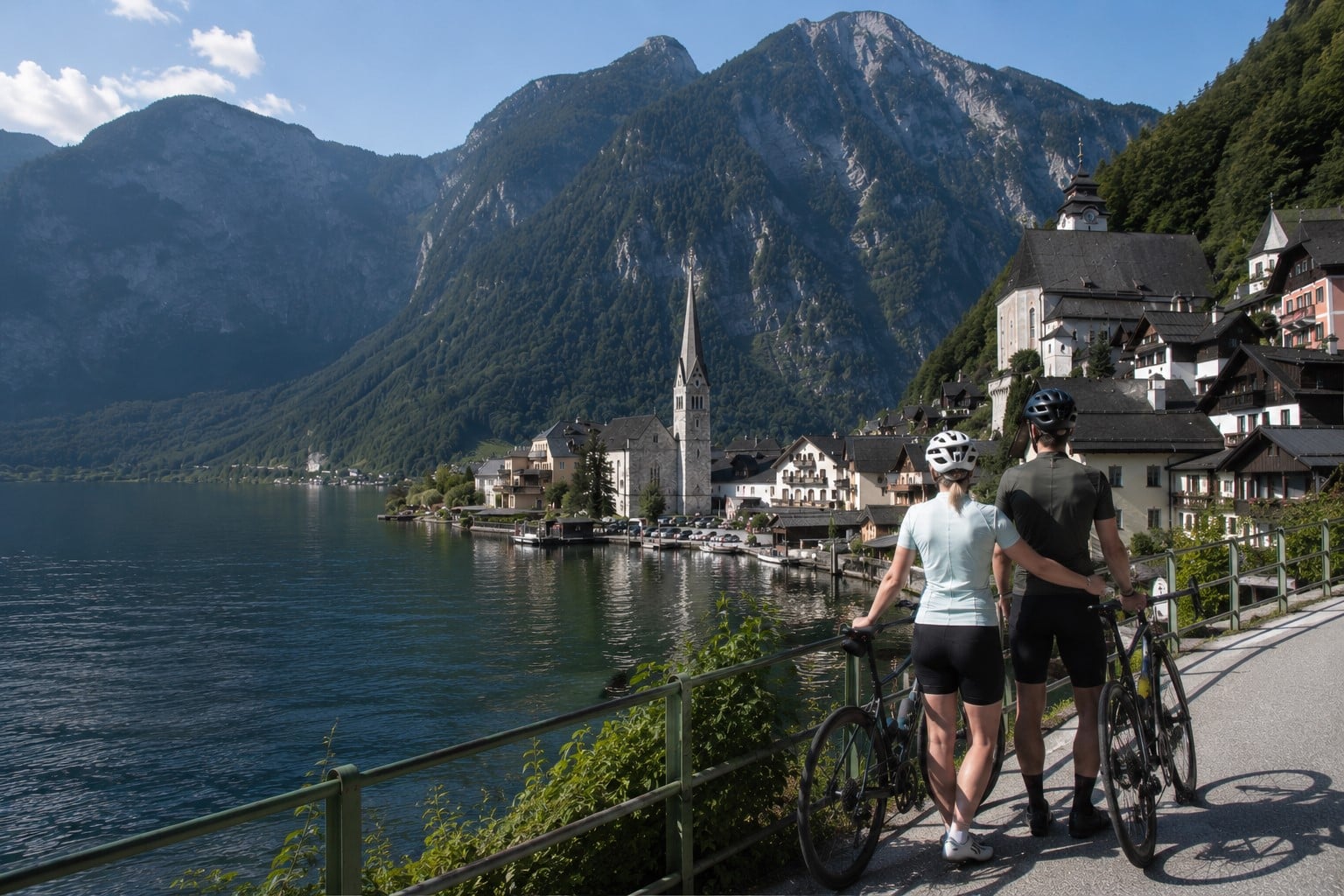
On the other side, the Salzkammergut, around Salzburg, offers a more Alpine, more “postcard-like” Austria, where roads wind between meadows, forests and crystal-clear lakes. You link iconic stages such as Mondsee, Traunsee, Hallstatt (UNESCO) and Wolfgangsee, with mountain panoramas reflected in the water. Here, the itinerary of the ten Austrian lakes and its more upscale version combine bike paths, greenways and quiet agricultural roads, with sometimes hillier sections, but always designed for the pleasure of riding and for pauses by the lakes. Pass through charming villages, pass through Gmunden and its Ort Castle, Bad Ischl and its imperial heritage, and return toward Salzburg with the feeling of having pedalled through a bright and soothing Austria.
Whether you choose a great itinerary along the Danube or a loop of lakes starting from Salzburg, Austria remains a flagship destination for cycling travel: smooth to ride, safe and incredibly photogenic, with a rare balance between nature, heritage and the lifestyle.
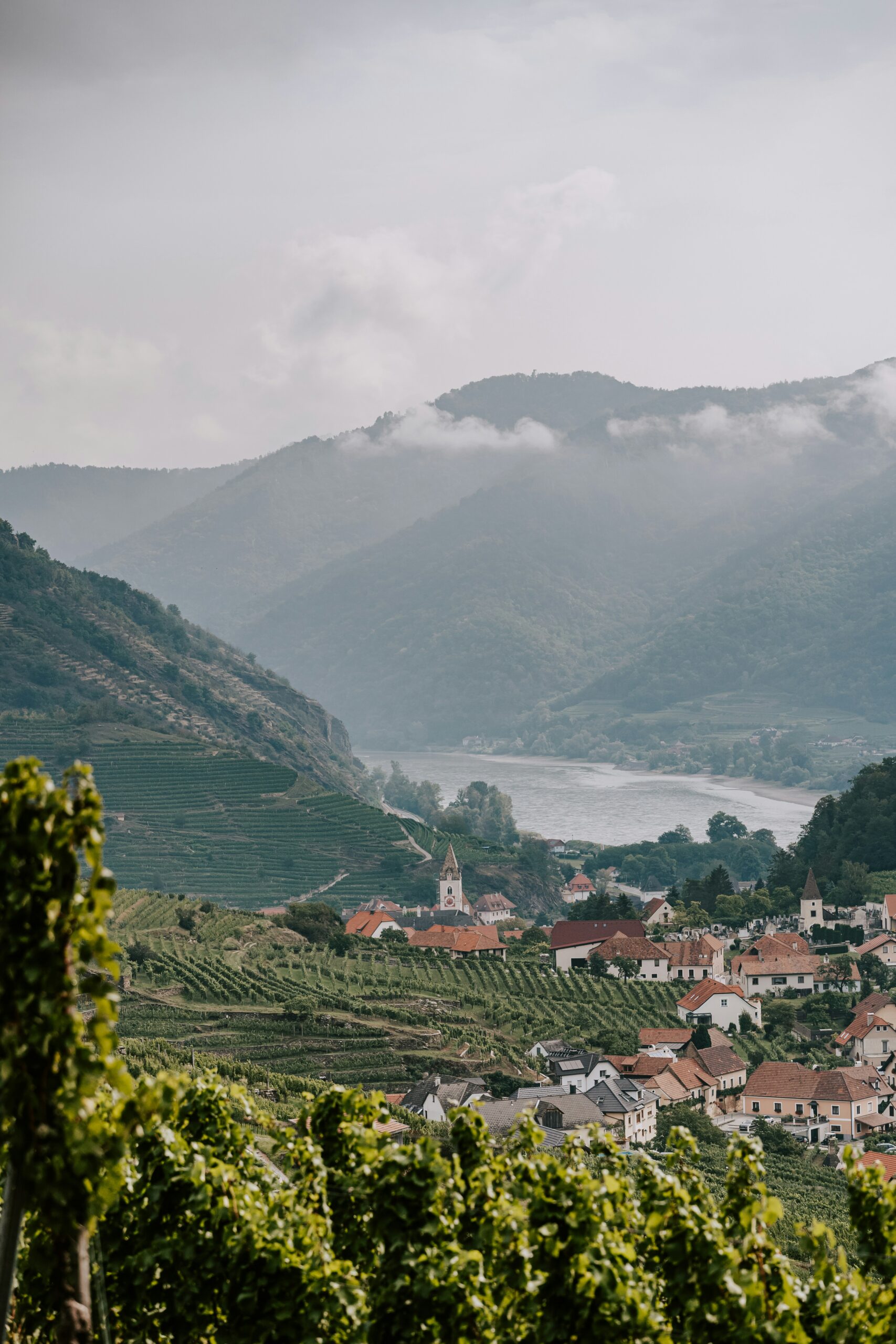
Austria is a country particularly well suited to cycling travel. The main cycling itineraries, such as the famous Danube Cycle Path (Donauradweg), are clearly and uniformly signposted, which greatly facilitates orientation. Route maps and GPS tracks are easily accessible online, making it possible to prepare your stages before departure.
Accommodations:
Bett+Bike-certified accommodations offer services especially adapted to cyclists throughout Austria: secure bike storage, a basic repair kit and a generous breakfast. Establishments are often located near the country’s main cycle routes, such as the Donauradweg, the Tauernradweg or the circuits around Lake Neusiedl, making it easier to organise the stages of a cycling trip.
Equipment to Bring:
To fully enjoy your cycling trip in Austria, plan clothing adapted to temperature variations, especially in spring and autumn. A water bottle, a light windbreaker and rain protection fit easily into panniers. Bank cards are widely accepted, but a few euros in cash can be useful in small villages or mountain refuges.
Transporting Bikes on Austrian Trains:
The Austrian rail network (ÖBB) accepts bicycles on many lines, a practical solution for reaching the starting point of an itinerary or adapting your route according to the weather. An advance reservation for the bicycle space is often required.
The best period for a cycling trip in Austria generally runs from April to October.
Spring and early autumn are particularly appreciated by cycle tourists thanks to mild temperatures, green landscapes and more moderate crowds. The months of May, June and September often offer the most pleasant conditions for cycling, whether along the Danube, in wine-growing valleys or at the foot of the Alps.
Summer is also an excellent season, with long days well suited to cycling stages. However, you should expect higher traffic on the most popular itineraries. To fully enjoy Austria’s bike paths and the country’s many cultural attractions, favour the shoulder seasons when the climate is comfortable and the landscapes are especially colourful.
Austria offers itineraries adapted to a wide variety of cyclists, from the occasional traveller to the more experienced cycle tourist. The most popular routes, especially along the Danube, use well-maintained bike paths and have little elevation gain, making them accessible to anyone with normal physical condition and the habit of cycling over several days.
In Alpine or hilly regions, some stages may be more demanding and require demanding effort. However, many itineraries offer the possibility of choosing an E-bike, allowing you to enjoy the landscapes without the terrain becoming an obstacle. Before choosing your cycling trip in Austria, it is recommended to take into account the daily distance, elevation gain and your cycle touring experience in order to select a route adapted to your rhythm.
Austria is one of Europe’s most renowned destinations for cycle touring. The country has more than 10,000 km of marked itineraries, including several internationally renowned cycle routes. Thanks to quality infrastructure, uniform signage and a rail network that easily accommodates bikes, it is possible to travel through the country at your own pace, whether you are a beginner or an experienced cyclist. Most major itineraries follow river valleys, which helps limit elevation gain while crossing varied landscapes, between vineyards, historic villages and Alpine panoramas.
The Danube Cycle Path is Austria’s best-known itinerary and one of the most popular in Europe. Between Passau and Vienna, it follows the course of the river for nearly 300 km through accessible and varied landscapes. The Wachau Valley, listed as a UNESCO World Heritage Site, is one of the highlights of the route, with its terraced vineyards, abbeys and medieval villages.
Level: beginner to intermediate
Best season: April to October
Not to be missed: the Wachau Valley, Melk Abbey, Vienna’s historic center
The Tauernradweg connects the Austrian Alps to the Inn Valley by following the Salzach and Inn rivers. Despite its mountainous surroundings, the itinerary remains accessible thanks to a generally descending profile. It passes through Salzburg, Mozart’s birthplace, before reaching landscapes of valleys, waterfalls, and Alpine meadows.
Level: beginner to intermediate
Best season: May to October
Not to be missed: Salzburg, the Krimml Waterfalls, panoramas of the Alps
The Drava cycle route follows the river of the same name from East Tyrol to the Slovenian border. Awarded several times for its quality, it alternates between Alpine lakes, peaceful villages and broad green valleys. Its moderate terrain makes it an excellent option for Travelers looking for a smooth itinerary that is less busy than the Danube.
Level: beginner to intermediate
Best season: May to September
Not to be missed: the Carinthian lakes, Villach, the Alpine landscapes of East Tyrol
At the far west of the country, this famous loop circles Lake Constance through Austria, Germany and Switzerland. The route is relatively flat and punctuated by historic towns, ports, and established beaches. It is one of the most accessible itineraries for a first cycling travel experience in Europe.
Level: beginner
Best season: April to October
Not to be missed: Bregenz, the lakeshores, the region’s wine-growing villages
The Alpe-Adria-Radweg connects Salzburg to Grado, on the Italian coast, crossing the Austrian Alps and then the plains of Friuli. This international cycle route is appreciated for the diversity of its landscapes and the gradual evolution of the cultures encountered along the way. Former railway lines converted into bike paths make it possible to cross the mountains gently.
Level: intermediate
Best season: May to September
Not to be missed: Salzburg, the Carinthian Alps, the arrival on the beaches of the Adriatic
Located in the east of the country, near the Hungarian border, Lake Neusiedl is surrounded by a cycling loop of about 120 km. The terrain is almost entirely flat and passes through landscapes of vineyards, marshes and wine-growing villages. The region benefits from one of Austria’s sunniest microclimates.
Level: beginner
Best season: April to October
Not to be missed: Neusiedler See-Seewinkel National Park, the vineyards of Burgenland, villages with Austro-Hungarian influences.
Austria offers remarkable landscape diversity for cycle touring. Between river valleys, wine-growing regions, Alpine lakes and mountains, each region has its own identity and rhythm. Here are some of the destinations most appreciated by cycling travellers.
This is the country’s most famous cycling region. Between Passau and Vienna, the Danube Cycle Path passes through the Wachau Valley, listed as a UNESCO World Heritage Site. Terraced vineyards, Baroque abbeys, historic villages and easy bike paths make it an ideal destination for discovering Austria by bike.
Located east of Salzburg, this region brings together some of the country’s most beautiful lakes. Cycling routes connect the Wolfgangsee, Mondsee, Traunsee and Hallstätter See through landscapes where mountains are reflected in clear water. It is one of the most emblematic regions for a cycling trip in Austria.
The Salzburg region appeals with its blend of cultural heritage and nature. Cycling itineraries often follow the Salzach River and make it possible to connect villages, castles and Alpine landscapes while enjoying the unique atmosphere of Mozart’s city.
In southern Austria, Carinthia enjoys one of the mildest climates in the country. Its many lakes, such as the Wörthersee or Millstätter See, offer pleasant routes punctuated by swims, lakesides cafés and views of the Alps. The region is also crossed by the famous Drava Cycle Path.
For cyclists looking for more pronounced mountain scenery, Tyrol offers spectacular valleys, traditional villages and itineraries with magnificent viewpoints over Alpine peaks. Many bike paths nevertheless follow valley floors, allowing you to enjoy the landscapes without tackling the high passes.
In the east of the country, near Hungary, Burgenland reveals a different Austria. The terrain is gentle, vineyards are omnipresent and the villages are influenced by Austro-Hungarian history. The tour of Lake Neusiedl is one of the country’s most accessible routes, especially appreciated by Leisurely cycle touring enthusiasts.
Cycling holds an important place in the Austrian way of life, both for everyday transport and for leisure. In cities such as Vienna or Salzburg, cycling infrastructure is well developed and many residents use bicycles as a means of transport. This culture is also found in tourist regions, where cyclists benefit from a particularly favourable welcome.
For several decades, Austria has invested in the development of safe bike paths and in major routes such as the Donauradweg, the Tauernradweg and the Drauradweg. Accommodations, restaurants, train stations and tourist offices are often well adapted to the needs of cycling travellers, which makes it easier to organize an ipoint-to-point trip.
This cycle touring tradition is also explained by the diversity of Austrian landscapes. River valleys, wine-growing regions, Alpine lakes and mountains offer ideal terrain for discovering the country at a slower pace. In Austria, cycling is above all a way to travel, enjoy the landscapes and take the time to stop in the villages, cafés and markets that line the route.




Want to go farther? Discover our other cycling trips, from the Danube to the coasts of Portugal, on itineraries chosen for the pleasure of riding.